











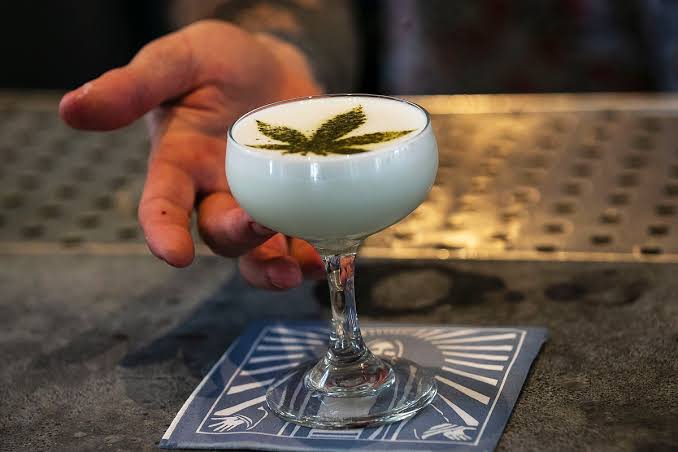
Oil and water refuse to mix. Every cannabinoid beverage ever made has to solve that ancient kitchen problem first, because THC is an oil and drinks are mostly water. For every fast-acting drink and syrup listed on budpop.com, nano-emulsification became the industry’s answer. Shoppers never see the technology. Everyone of them feels it.
How the process works?
Picture cannabinoid oil broken into droplets so small that light passes around them. Specialized equipment, ultrasonic processors or high pressure homogenizers, shatters oil into particles measured in nanometers, then surrounds each droplet with emulsifier molecules keeping everything suspended evenly through liquid. Done right, the finished emulsion stays clear, stable, and uniform from first sip through last. Done wrong, oil creeps back together over weeks, drifting toward the surface, and the final pour of a bottle carries triple the dose of the first. Particle size decides nearly everything downstream. Smaller droplets absorb faster, resist separation longer, and dodge the cloudy appearance that makes shoppers hesitate at shelves. Holding size distribution tight, batch after batch, is where beverage science earns its keep, and where cheap contract manufacturers quietly fail their clients without anyone noticing until returns arrive.
Why speed changes everything?
Traditional edibles wander through digestion and liver processing before anything happens, an hour minimum, often two. Nano-emulsified cannabinoids begin absorbing through the mouth and stomach tissue almost immediately, and many drinkers report onset within fifteen or twenty minutes. That single change rewrote who buys these products. Alcohol drinkers expect a beverage to behave like one, and feedback arriving within the first glass, and cannabis drinks finally match that pacing. Sessionability follows naturally, someone gauging their state before deciding about a second can, exactly as beer drinkers always have. Overconsumption accidents drop when feedback loops shorten, which quietly improves the whole category’s reputation one avoided incident at a time.
Manufacturing demands stack
- Equipment spending arrives early, commercial-grade homogenisers carrying price tags small brands feel deeply.
- Emulsifier selection involves genuine tradeoffs, taste impact, label friendliness, and stability, all pulling against each other.
- Stability testing must run across months and temperature swings, since a truck in summer heat stresses every formula.
- Particle size verification needs laser diffraction instruments, which most facilities rent rather than own outright.
Skipping any step produces drinks that pass launch and fail in the field, separating on shelves while customers photograph the evidence for reviews.
Competitive moat forming
Formulation skill compounds into a real advantage here. Brands that mastered emulsion early hold trade secrets around emulsifier blends and processing parameters no certificate reveals, and copying a stable formula from outside takes competitors a year of trial batches minimum. Meanwhile, shopper expectations keep climbing, with a faster onset, a cleaner taste, a longer shelf life, and each product generation resets the bar for everyone. Contract manufacturers offering off-the-shelf nano bases flattened entry somewhat, yet house formulas still separate category leaders from private label lookalikes in blind tastings and repeat purchase data alike. Whoever controls the science controls the experience, and experience is the only thing a beverage really sells.
Fast-acting drinks turned cannabinoids into a genuine beverage category rather than a novelty aisle, and nano-emulsification did all the invisible work underneath. Brands holding the tightest particle science today are quietly holding tomorrow’s cooler door, whether or not any shopper ever learns the word.